

TL;DR
My unofficial “Somewhere Over Laredo” remix has an extended mix and a radio edit, both at 138 BPM.
The same piano-and-keys entrance happens around 3:43 in one and 1:37 in the other. A volume jump there needed attention in both arrangements.
The valuable comparison is the chorus entrance, including what leads into it. Just using matching timestamps would put me in the wrong part of the song.

At 3:43 in my extended “Somewhere Over Laredo” remix, the volume jumped. My listening note called it “the swell effect.” I knew where it bothered me. Sounded fine when I was working on it with headphones. It stood out while doing a listening session in the evening on a higher-end sound system.
My remix runs at 138 BPM in D-flat major. I built it in Ableton Live around Lainey Wilson’s recorded vocal, with new electronic accompaniment. This is an unofficial remix. The full track remains private while I seek the necessary permissions. This remix isn’t connected with Lainey’s team, and the excerpt doesn’t imply their endorsement.
Listen: A 65-second excerpt from my Somewhere Over Laredo remix, after the piano-and-keys revision and before a later vocal-effect adjustment. Lainey Wilson’s chorus comes in about 14 seconds into the clip, over the trance arrangement I built around her original vocal.
Where the two arrangements meet
The extended version gives the opening 32 bars before the first verse. The radio edit uses eight. Later, the extended arrangement goes through a second verse, build and drop before reaching the breakdown. The radio edit goes from its first drop into that breakdown.
So the last breakdown chorus sits at bar 129 in the extended mix and bar 57 in the radio edit. Those numbers name positions in two different arrangements. The musical section is the connection between them.
I’m not making one version faster. At the same tempo, the radio edit reaches that passage 72 bars earlier. It also reaches it after a different stretch of music. That changes what I need to listen through when I check the entrance.
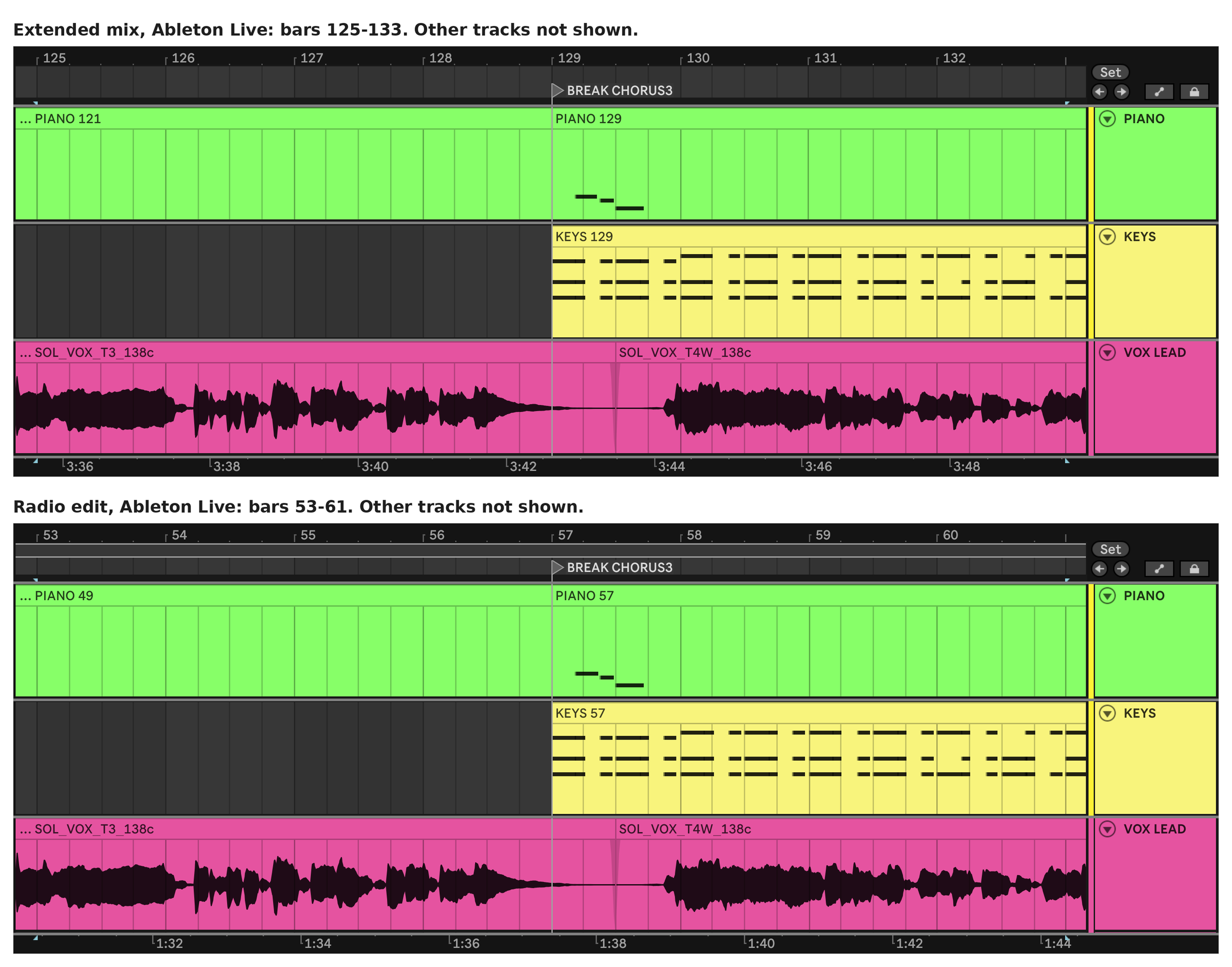
If I take a note at 3:43 and open the radio session at 3:43, I’m looking past the part I meant. A section name gets me closer. Then I can find the piano pickup, the first keys notes and the vocal that follows them.
It was the piano and keys
The entrance I composed combined a three-note piano pickup with the first bar of a keys figure. That first keys bar was already about 9 dB louder than the bars after it. An earlier level increase for the breakdown had unintentionally lifted it further.
The correction lowered the piano pickup by 5.5 dB and lowered just the first bar of the keys figure by the same amount. The notes stayed where they were. The later keys bars kept their level.
Those are settings for this passage, not a suggestion to turn every piano down by 5.5 dB. I wanted to keep the entrance and stop that first moment from jumping out.
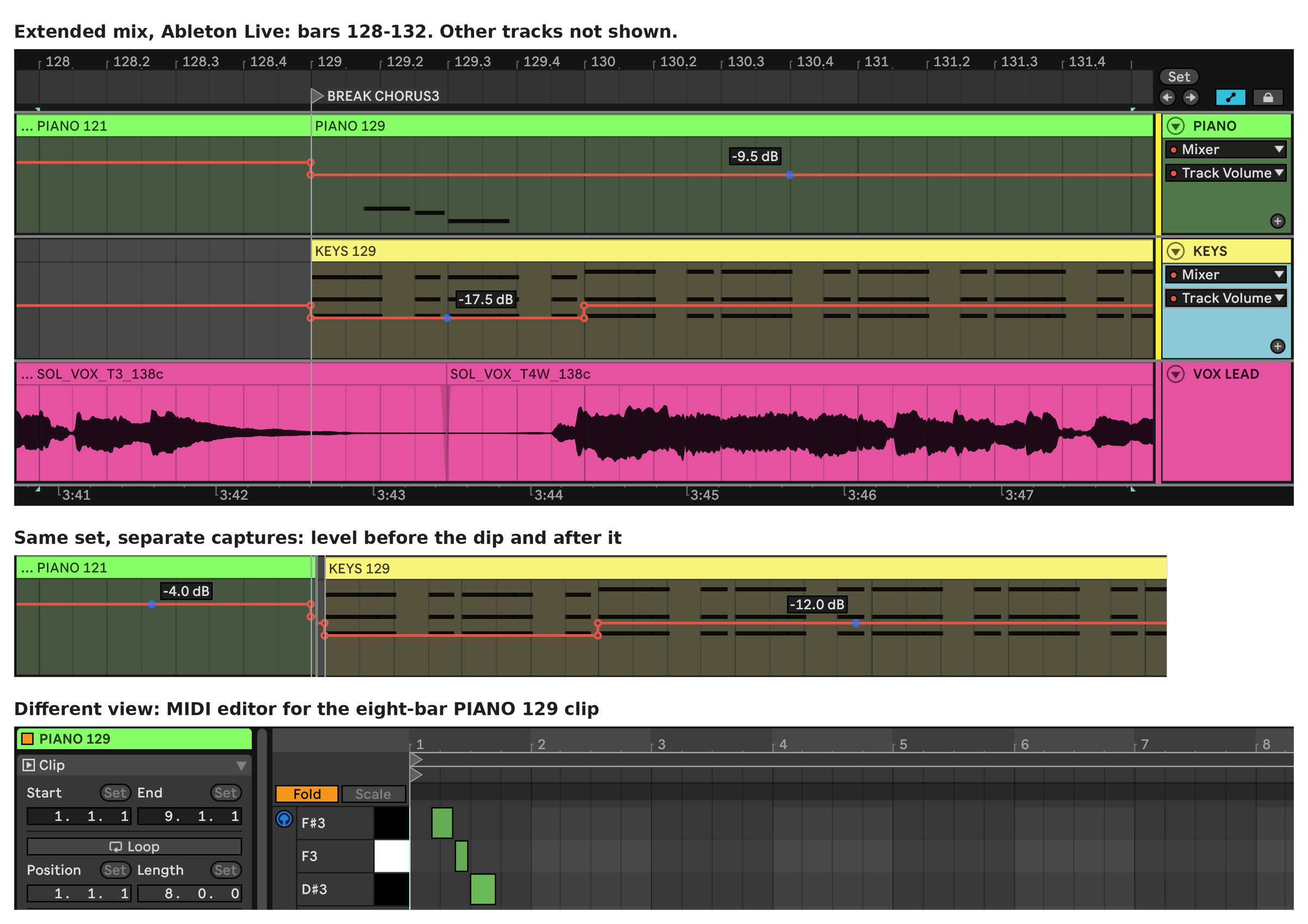
In Live, automation changes a control over time. Here, it lowers the piano pickup and the first bar of the keys part. Ableton’s automation reference explains how to show those changes alongside the notes or audio.
I’ve already written about checking what an edit leaves alone. The extra complication here is finding the same passage in the extended mix and the radio edit.
Check the arrival in each version
The project’s checks compared the loudest 400-millisecond stretch in the bar before the entrance, the entrance bar and the bar after it. In the extended club master, the entrance went from about 5 dB above the previous bar to about 1 dB above it. The neighboring bars barely changed. The radio version showed a similar reduction.
That supports the narrow change I wanted. It didn’t tell me how much lift the chorus should have. A measurement can show a smaller jump while the musical entrance still feels wrong.
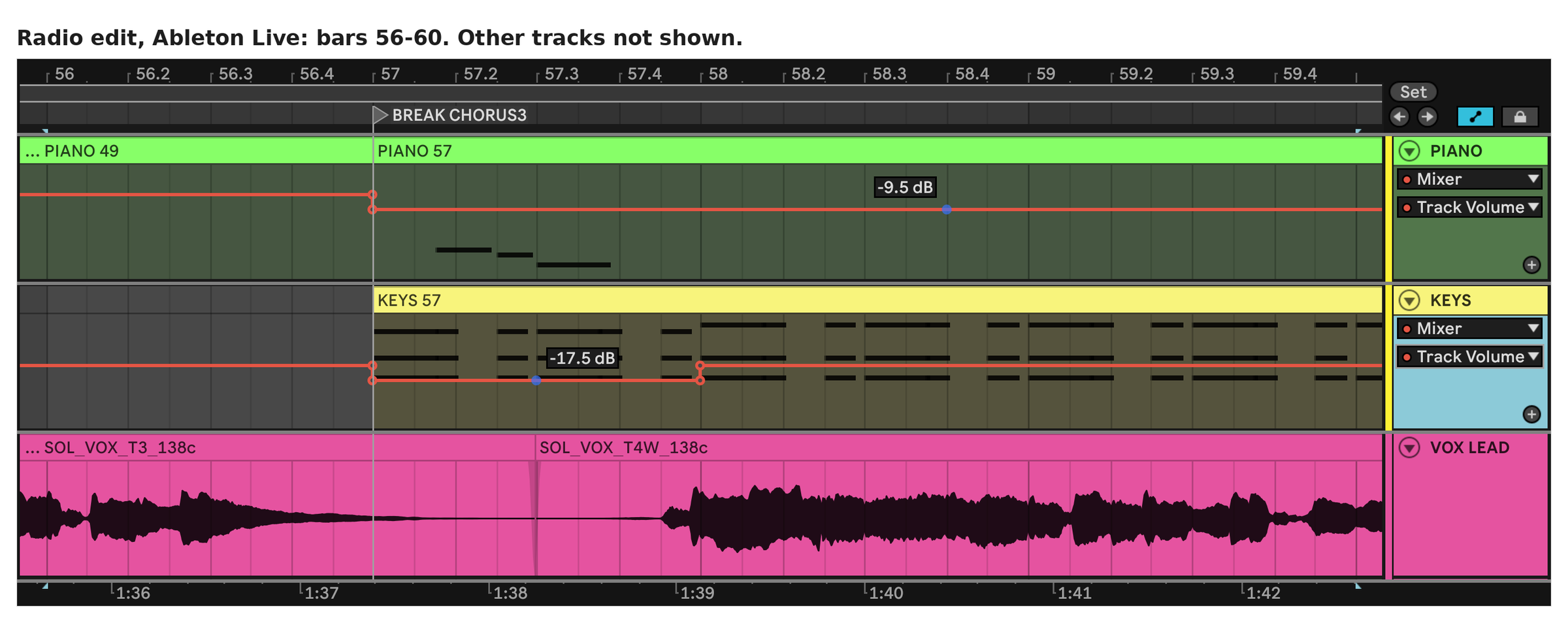
For a track with two arrangements (and I should have held off on arranging the radio edit to start with), I’d start playback before the section in each version and continue into the next phrase. Keep the listening level steady. Follow the vocal through the entrance, then listen again for the instrument that first pulled your attention away.
A loop around the corrected bar helps isolate the change. I’d also play the longer approach. The extended mix has had another verse and drop before this point; the radio edit hasn’t. I want to hear the arrival after that actual lead-in.
Resources
Ableton Live 11: Automation and Editing Envelopes: displaying and editing control changes alongside clips.
The Generator Is Becoming an Editor: my earlier piece on checking the parts an edit was supposed to preserve.