

TL;DR
My Big Chair remix combines vocals from three Tears for Fears songs in one 134 BPM arrangement, moving through melodic techno, psy-techno and trance.
I connected three keys, adjusted vocal timing and rebuilt the “Head Over Heels” piano figure as MIDI.
It’s an unofficial rework. The full mix remains private while I seek release permission.
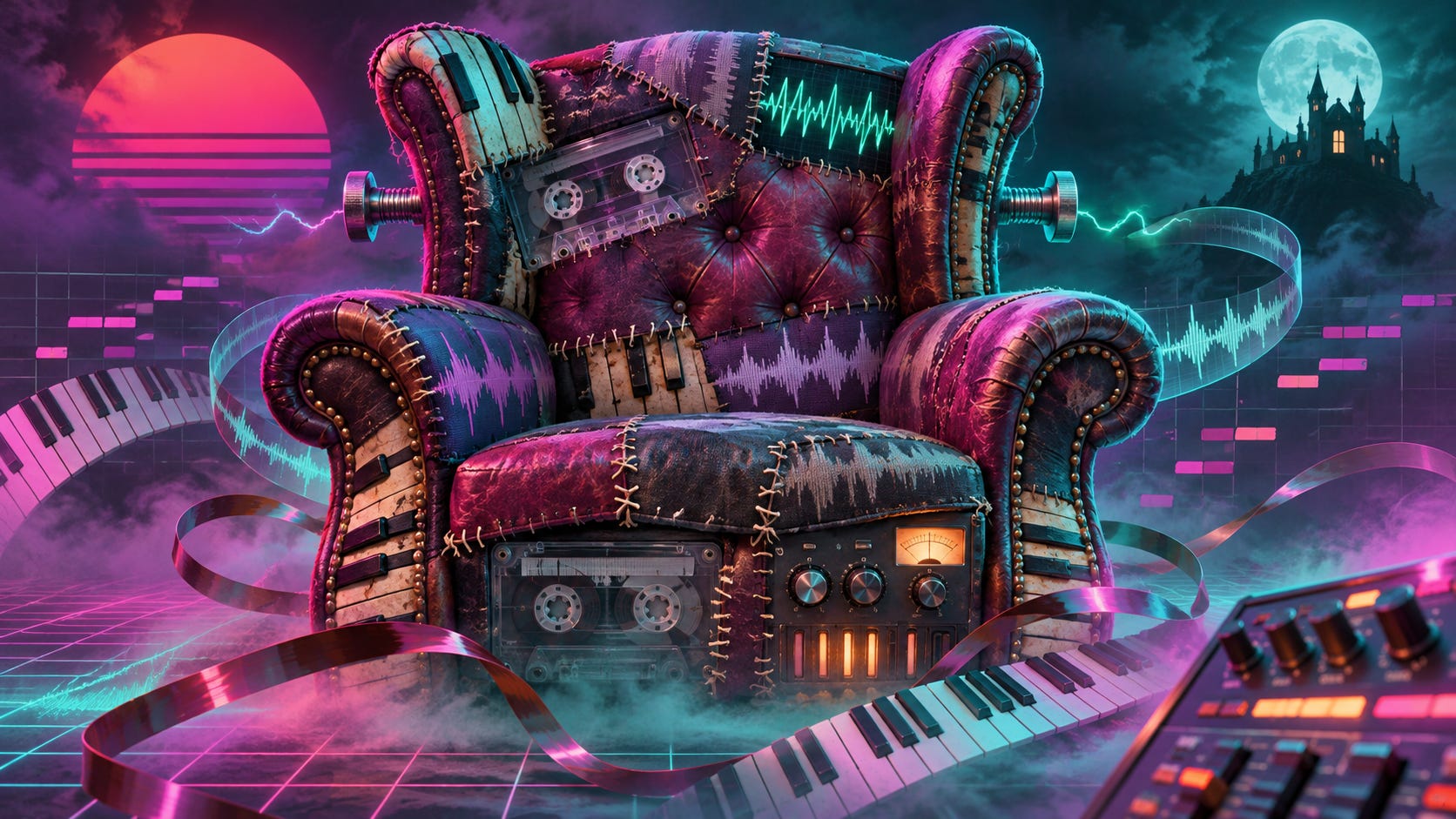
Wendy and I were talking late one night and somehow we landed on the word Frankenfears. I laughed, mostly because it described a project I had worked on several months prior.
I’d taken pieces of three Tears for Fears songs and stitched them together into one electronic track. Everybody Wants to Rule the World. Shout. Head Over Heels. Each has its own voice, rhythm and personality. Now they’re all wandering around inside the same Ableton project.
I call the result Big Chair. A bit like Frankenstein’s monster, except this one’s got an offbeat bass and a kick drum that took more work than I care to admit.
Halloween was two days ago. Today’s November 2, the final day of Día de los Muertos, a tradition about remembering the dead rather than a bonus night of Halloween monsters. The timing got me thinking about old songs, old memories and this strange collection of musical parts. Thus Frankenfears.
The music I grew up with
I grew up hearing Tears for Fears on Los Angeles radio. Some songs do that thing where you hear two seconds and you’re immediately younger again. The sound takes you somewhere before you’ve even thought about the lyrics.
Their album Songs from the Big Chair arrived in 1985. I was a young teenager. “Everybody Wants to Rule the World” had that almost effortless sway. “Shout” felt enormous, like someone had opened a door and let all the pressure out. “Head Over Heels” brought this beautiful piano figure that still stays with me.
I love the originals. That’s the reason for taking on this project in the first place.
I began this project in June, 2026.
Three songs walk into an Ableton session
I didn’t want a greatest-hits medley. Play a chorus, crossfade, play another chorus. That would be easy to recognize and probably fun for about thirty seconds, but it’s not the record I wanted to make.
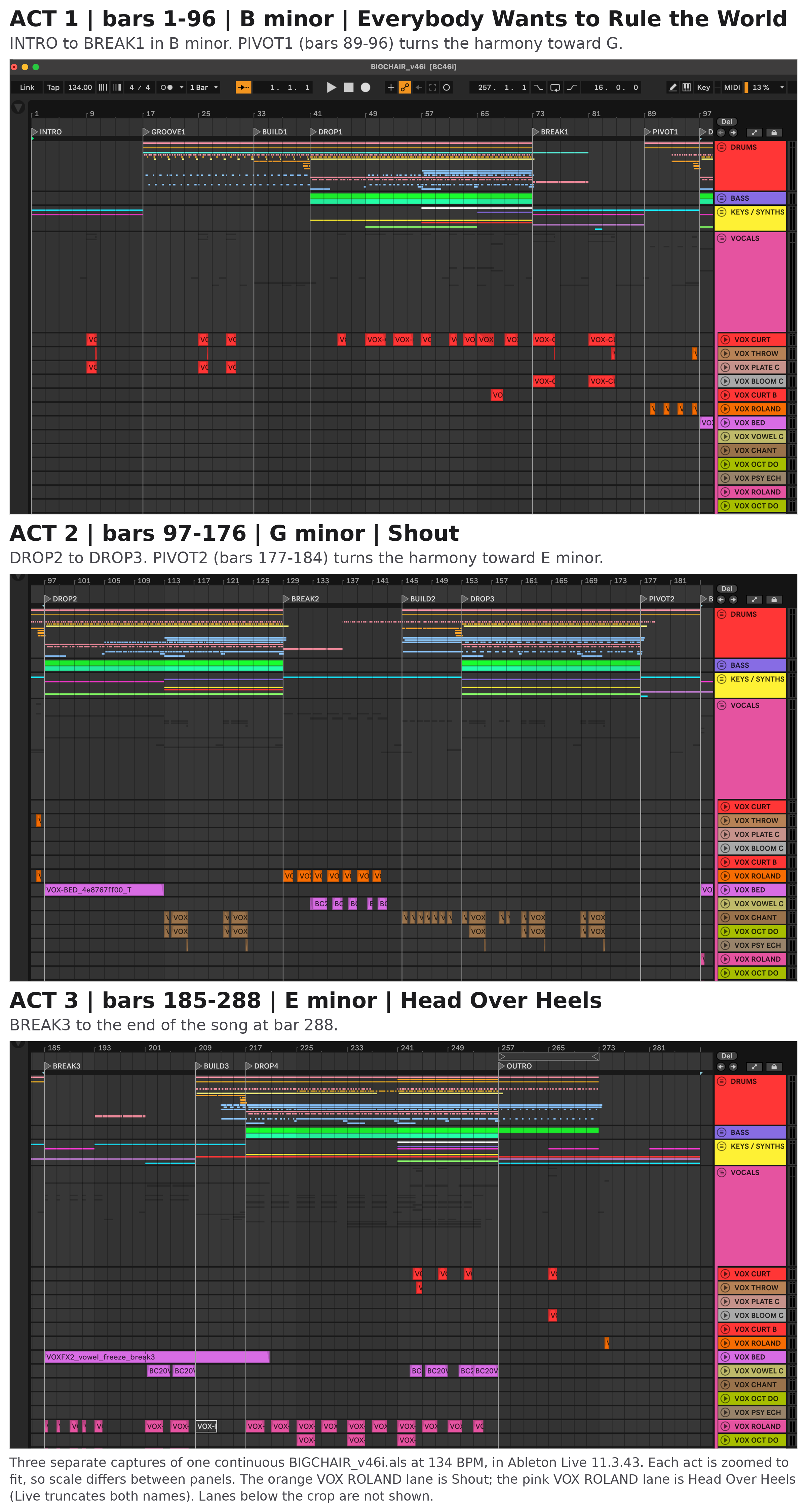
Instead, I built three acts. “Everybody Wants to Rule the World” opens the story in B minor. “Shout” brings it into G minor and a much heavier psy-techno feel. “Head Over Heels” takes over in E minor and lets the trance side of the track open up. All three sections live at 134 BPM.
There’s a reason I didn’t force the whole piece into one key. Each vocal performance already has a shape. You can move it, tune it and stretch it, but push too hard and it stops sounding like the singer you remember. I wanted the accompaniment to work with those voices, not flatten them into something interchangeable.
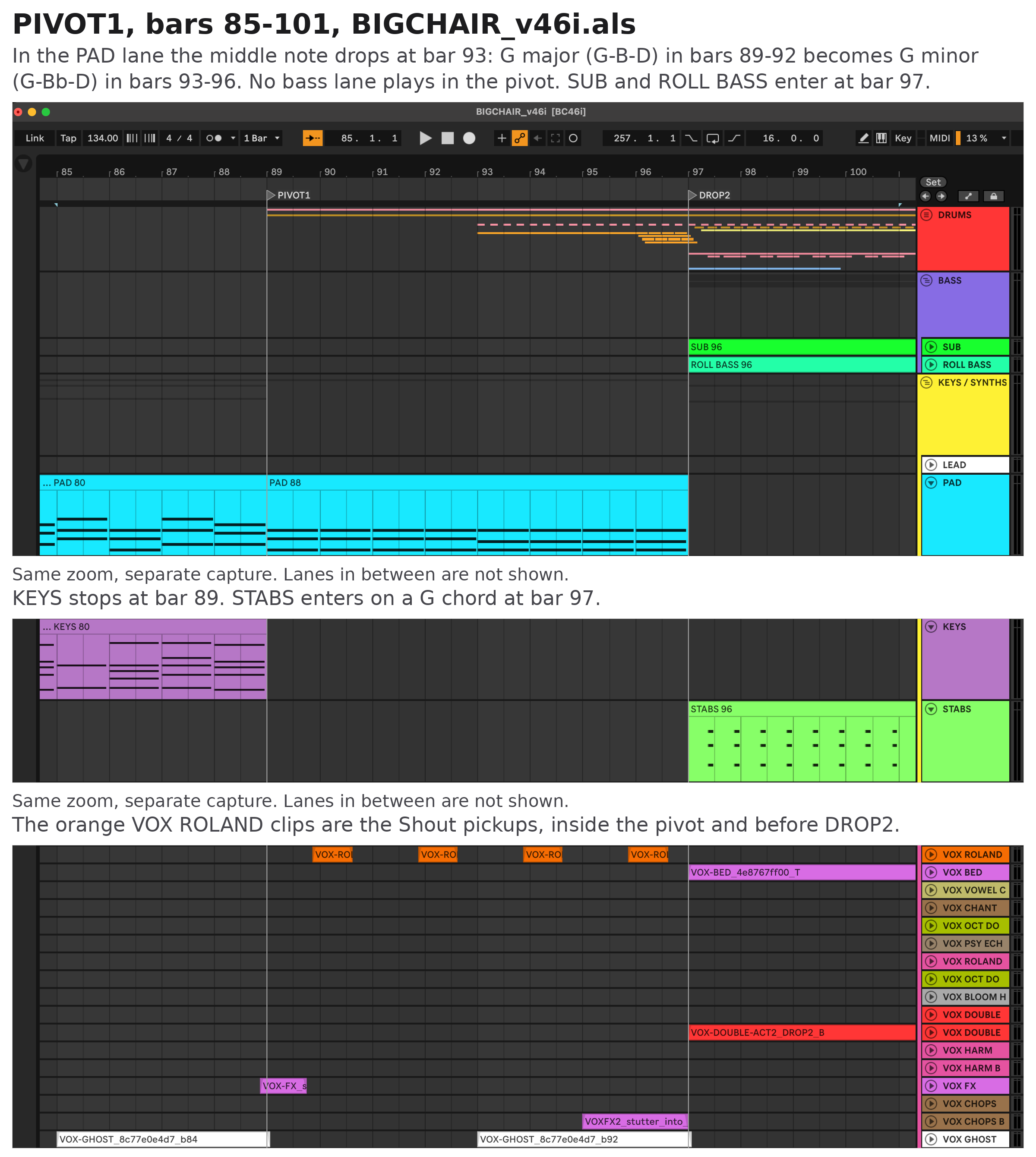
Connecting the three sections meant building short harmonic transitions. In the first, the pad changes from G major to G minor, then the bass enters on G. Ideally you feel the next section coming before you realize we’re somewhere else.
Here’s a little taste of Frankenfears. Three Tears for Fears songs, stitched together into my own trance and techno rework. This is what I’ve been working on 🎶
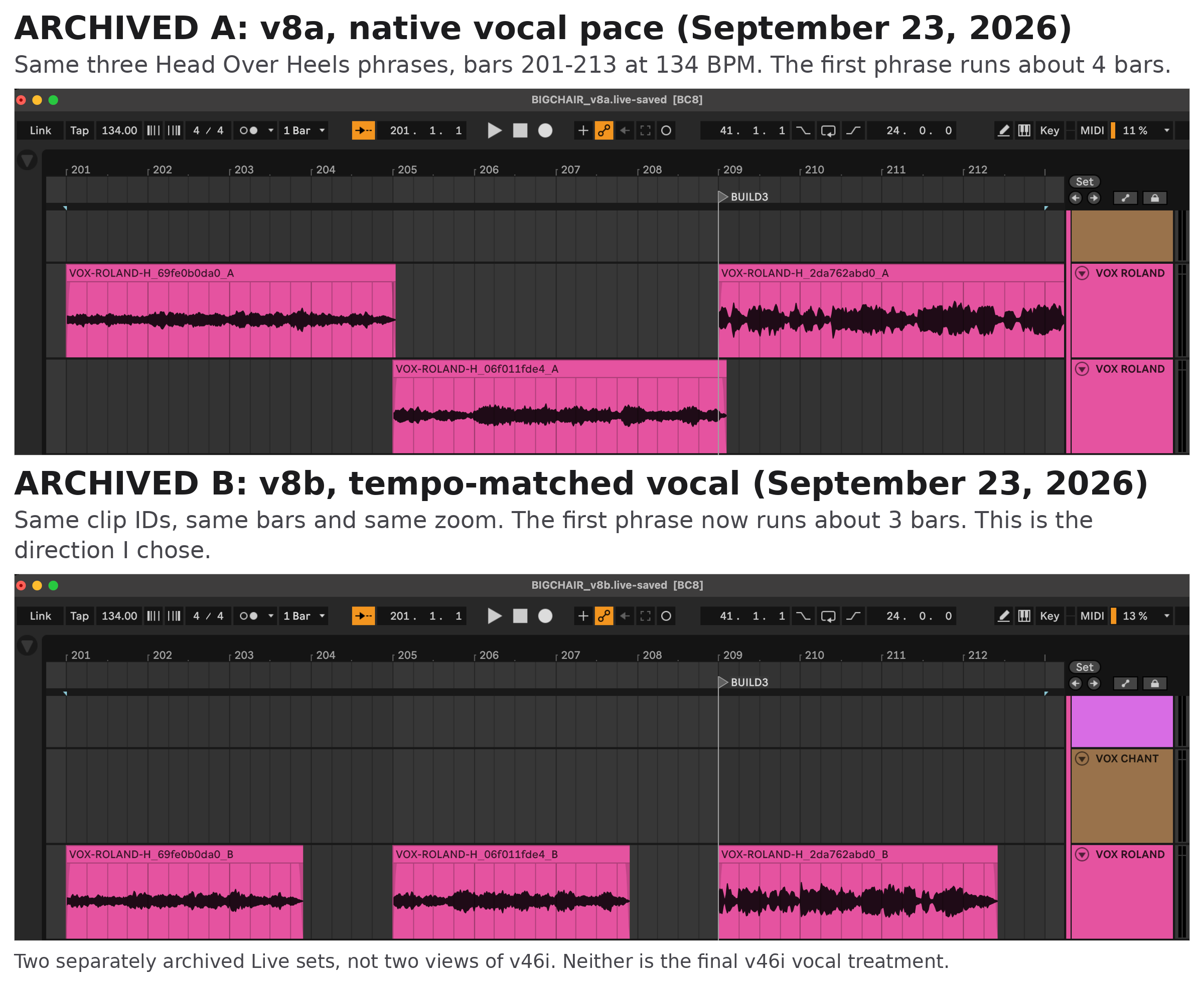
The hardest part of getting the voices to sit together wasn’t choosing another synth. The original recordings have different tempos and phrasing. In the early versions, some lines began in the right place but the words still moved at their original pace, which made them feel slow against the new groove.
I compared a more natural-paced approach with one that brought the individual syllables closer to the 134 BPM rhythm. I preferred the second. Then came all the small edits that keep a stretched, separated vocal intelligible without sanding away its character. These were vocal stems extracted from recordings, not clean multitracks delivered by the band.
The piano is a little Easter egg
Here’s the part I especially like.
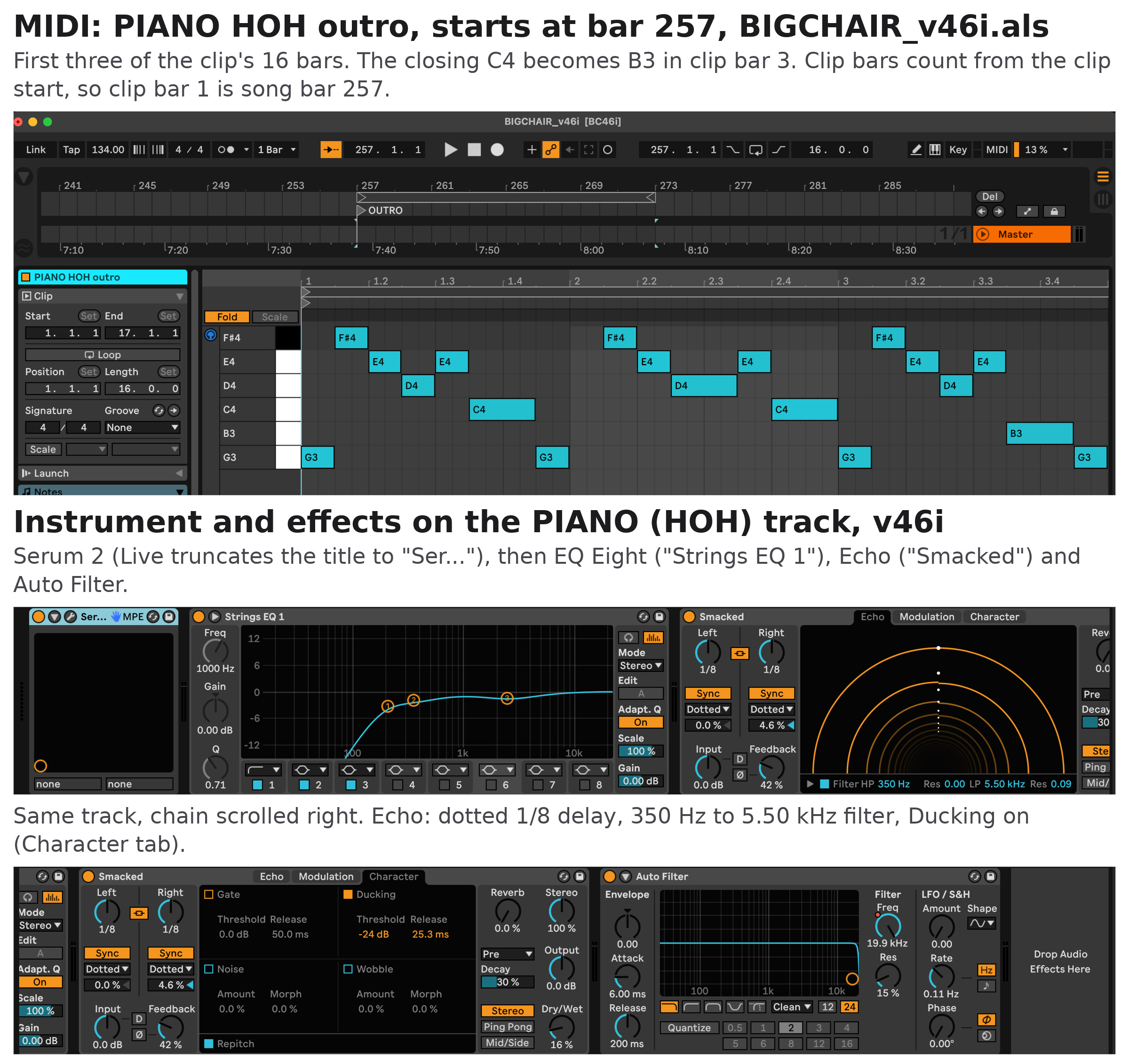
Head Over Heels has a piano figure that fans may recognize immediately. In Big Chair I worked out the notes and played that figure again with MIDI rather than dropping the original piano recording into the track. It’s a small detail, but a meaningful one for this project.
My third act is in E minor. G major and E natural minor share the same seven notes, so I could keep the piano figure at its original pitch. I still changed the closing C to B so it worked against my pads.
You can hear hints earlier, too. The project notes put quiet two-note references near bars 82 and 177, before the full idea returns toward the outro. Whether someone notices them doesn’t particularly matter. I like that the record has a few things waiting for a second listen.
In September, I also changed the instrument playing those MIDI notes. I replaced a bare stretched grand-piano sample with a more fitting synth patch and gave it a filtered, ducked delay. The notes stayed. The voice of the instrument changed.
What making this monster taught me
I kept discovering that a detail could be technically correct and still sound wrong. A vocal note can line up with a chord and still be too buried to hear. A kick can look fine on a meter and still make the bass sound like it’s popping. A piano can play exactly the right notes and have completely the wrong tone.
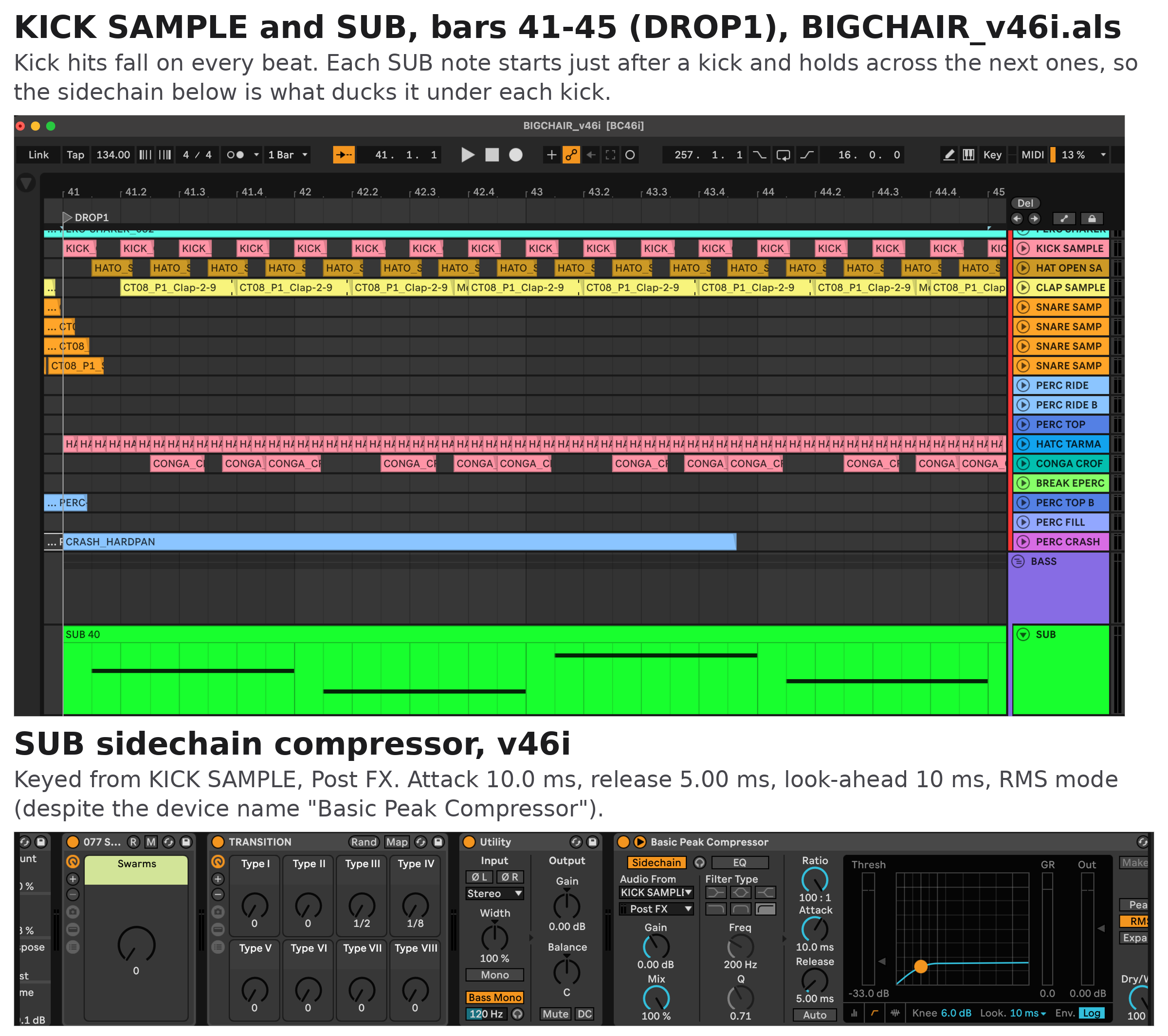
I changed the kick’s tail, adjusted the sidechain timing to remove an audible click in the sub and replaced the sound playing that piano figure. There were quite a few versions between that and the earlier mixes Wendy and I would listen to during evening music sessions.
For producers who want to try something similar, start with two melodic ideas. Find what they share before forcing them into one key. Try changing the accompaniment around each melody, then adjust the timing if the groove needs it. Listen to the transition without looking at the session. Do you hear one piece of music changing shape, or two pieces joined with tape?
You don’t need Ableton to appreciate that part. Most of us recognize when a song takes us somewhere naturally and when it makes a sudden, awkward turn.
Still a private creature
This is my unofficial Tears for Fears rework. The original voices are sampled from commercial recordings. I’ve contacted the relevant people about permissions, but I don’t have the approvals required yet to publicly release those recordings. The full mix is staying private while that gets sorted out.
I’m happy to share the thinking behind the arrangement and the work I put into it. Slso, this isn’t an official Tears for Fears collaboration.
It’s funny how a throwaway conversation can put a better name on a project you’ve been living with for months. Frankenfears started as a joke between Wendy and me. Now I’m looking at this Ableton session and thinking she might have nailed it.
Resources and project notes
Tears for Fears, Songs from the Big Chair (1985) on Spotify: Listen to the original recordings of “Everybody Wants to Rule the World,” “Shout” and “Head Over Heels.”
Related ZenOne Music reading: I Moved the Vocal to Fit the Track. One Phrase Changed the Plan., about a different vocal arrangement problem.