

TL;DR
I built my unofficial Patient Zero remix around Taylor’s voice at 124 BPM. Version 65e is the current version I’m working on, and today’s short preview uses its streaming master.
A better drum kit helped. The bass needed more body, and a replacement kick needed its playback length fixed.
A reversed vocal swell ends at exactly 13 seconds. Other 13-based Easter eggs went out with a violin part that didn’t fit.
This preview is from my latest version of the remix, v65e. The article below follows the earlier work through v62. The full remix stays private while I seek permission to release it.

My wife, Wendy, is a Swiftie. That’s rubbed off on me. We saw Taylor perform in Hamburg in 2024, on a trip that also took us to Tomorrowland in Belgium. I love trance and techno, but I listen to a lot more than that. What I end up making often blends genres according to whatever the muse brings to the surface.
When Wendy told me Taylor had bonus songs coming, I was waiting for the release so I could start a remix. On hearing “Patient Zero,” I was already reconstructing it in my head as a melodic house tune, with elements I’d learned from producing trance and techno. I started working as soon as the songs came out and documented my process along the way, partly for this article and partly to be good to my future self when I build the next song.
The production history in this article runs through version 62. Since then, the mix moved to version 65e, which is the current version I’m working on. Most of the examples below follow the work through version 59 where most of the heavy lifting happened. How I number those versions and keep track of what changed deserves an article of its own. The title of this article comes from an earlier round: the kick was finally right, but the bass still didn’t have the fat, thick sound I wanted. Since then I’ve worked on the vocal effects, made the three drops develop differently and added a few Easter eggs. I also spent two rounds on a violin part, then took it out.
The remix is built in Ableton Live 11 at 124 BPM, in G major. I’ll get around to upgrading to 12 eventually. For now, 11’s working for me. Why fix what isn’t broke? The extended mix runs about 4:13. Before committing to that direction, I compared three short versions I created in Ableton as a brainstorming session: melodic house, tech house and drum & bass. I picked the melodic house version. The drum & bass vocal felt sluggish at the start, and the tech house version didn’t quite capture Taylor’s vibe for me.
I wanted her chorus singing over the drop, the section where the full groove arrives. I wasn’t saving the biggest moment for an instrumental after she’d finished. Her voice needed to carry it, with some of my trance and techno background coming through underneath.
I’ve asked for permission to share the full remix on SoundCloud, with no monetization or distribution to Spotify, Apple Music or other streaming services. I shared a private demo and offered the article and final remix for review. I’m publishing these production notes and sharing short previews on social media. Permission to make the full remix public is still pending, so the full version stays private. Fingers crossed.
The screenshots show the earlier versions named in their captions, where I worked through the kick, bass and build problems. They aren’t screenshots of version 62 as there was no need to redo the screenshots.
Starting with better sounds
I wanted a warmer, more rounded house sound. That meant comparing sounds from my installed libraries, including Mark Knight’s Toolroom Trademark pack and The Producer School’s Astral pack, instead of continuing to process the existing kit which wasn’t landing for me.
The Mark Knight kit became the drum foundation. I still used an Astral percussion loop on a separate track, along with separate instruments for the bass and pad. The pad is a sustained synth sound beneath the other parts. I liked what the kit brought to the track, but I wasn’t going to use every sound in the folder just because they came together.
One early kick replacement had the longer tail and warmer tone I was looking for. But the exported mix lost punch in the measurements, so I went back to the previous kick.
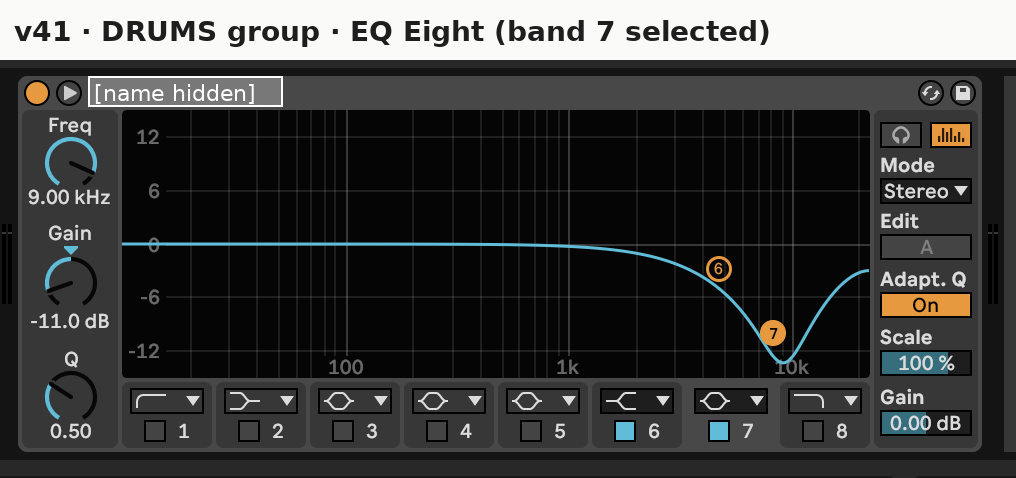
The Mark Knight kit needed shaping too. Its top end was brighter than I wanted, so I used EQ, which adjusts the balance of frequencies, to darken the drums together. I liked their character. I just didn’t need all that brightness.
The kick sample wasn’t playing as intended
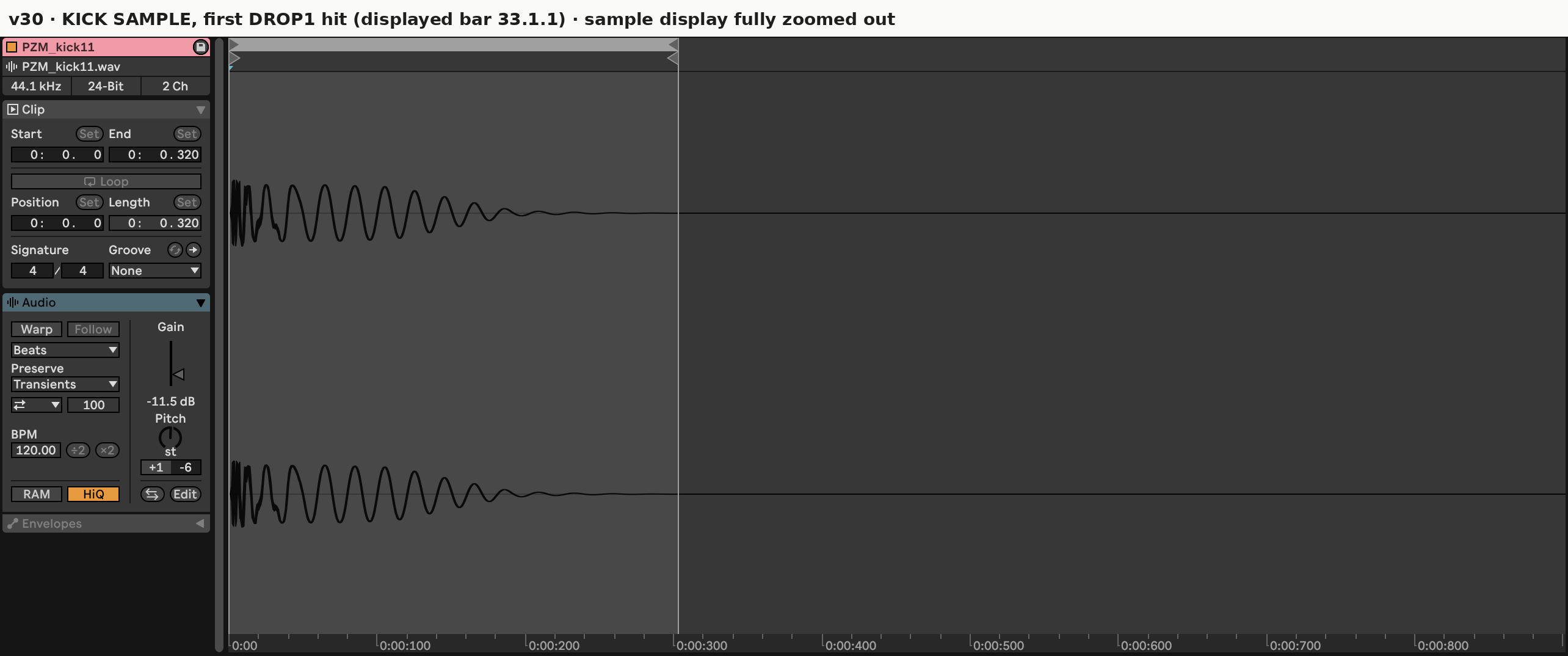
The later kick came from the Mark Knight pack. In v30, the project analysis put its low resonance near G at about 49 Hz. That was the pitch region I intended, but my ears told me that the kick wasn’t playing well with the other sounds.
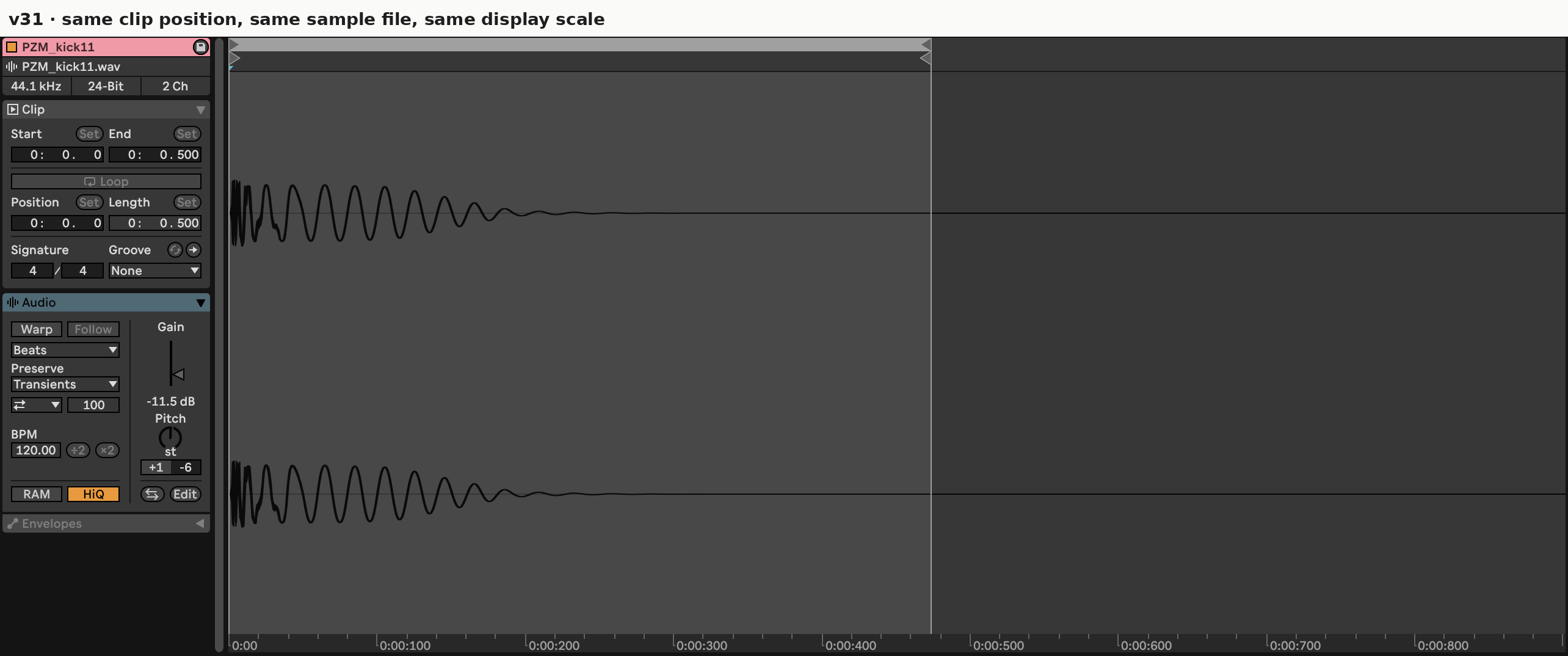
The kick swap had kept the old clip boundaries. The replacement file was about 0.95 seconds long, but the inherited playback region ended at 0.32 seconds. In v31, I moved that endpoint to 0.50 seconds. I’d picked a different kick and was still cutting it short with the previous kick’s settings.
That doesn’t mean every kick should play its entire source. A shorter tail can be exactly what a track needs. Here, shortening it hadn’t been the sound-design decision. It was a setting carried over from another sample, and sounded empty to me.
I’d checked the pitch. I also needed to open the clip and check what Ableton was actually playing.
More deep bass wasn’t the sound I wanted
The next problem was the bass. I wanted it fat and thick, with less of the upper-frequency rasp the existing sound had compared with my references.
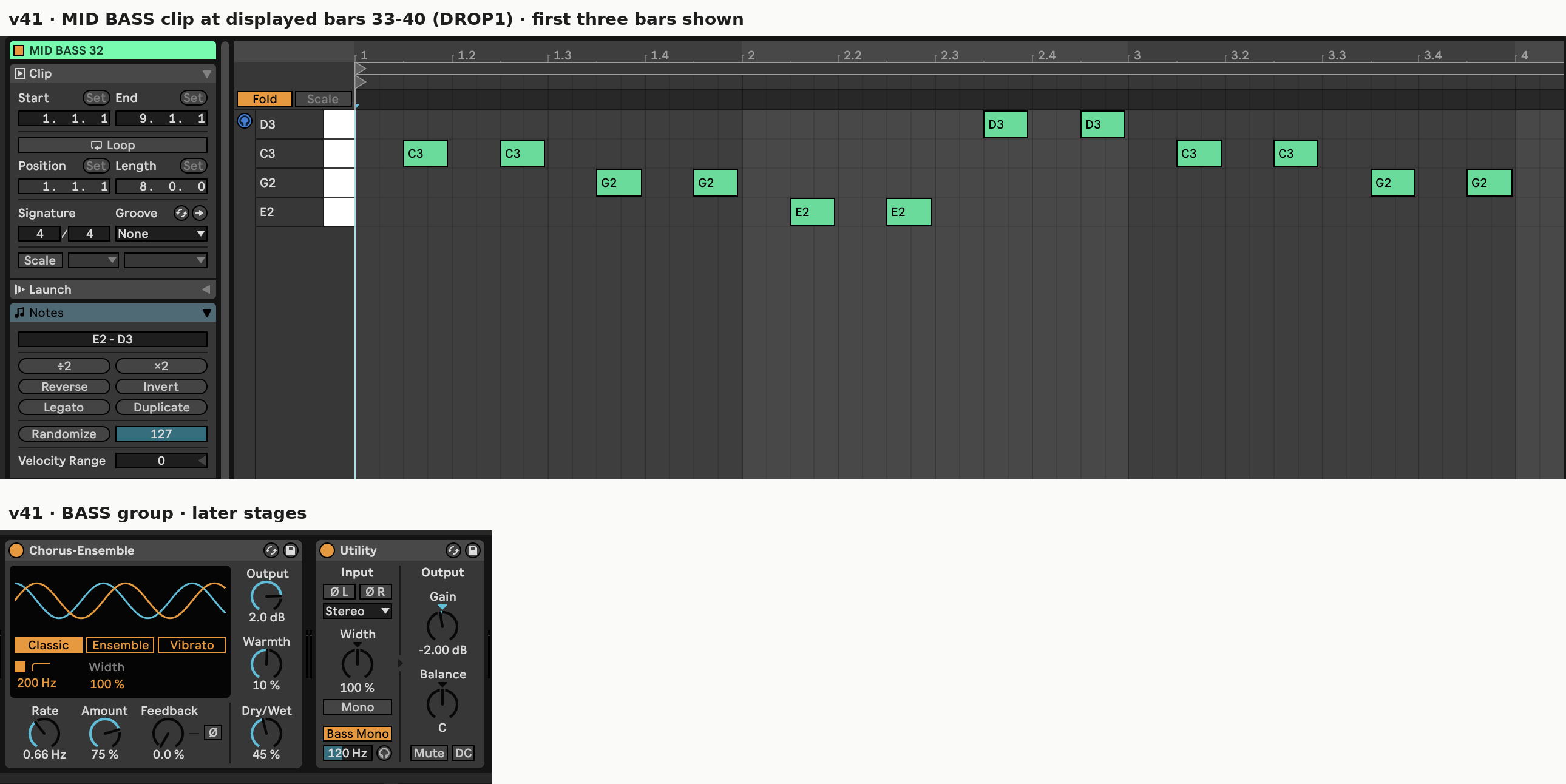
I changed the synth sound and lengthened the offbeat notes, the notes between the kick hits. A chorus effect added slightly delayed, shifting copies of the bass for stereo movement. I filtered the low frequencies out of that effect, then used a later stage to keep the deepest bass centered.
The first candidate landed an octave too low. Its analysis showed much more energy below the kick and less in the band above it. That gave the track more deep bass without solving the sound I wanted. I moved the notes up an octave in the next version, then adjusted the level.
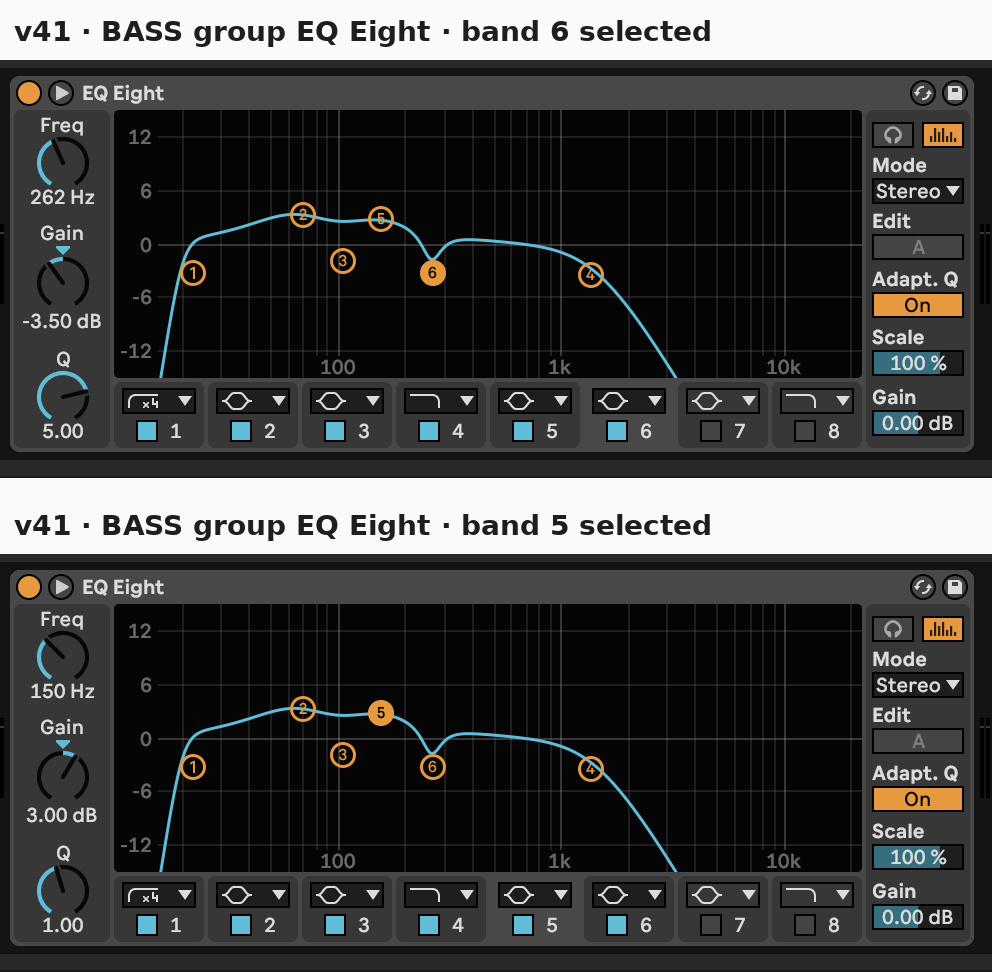
By v41, I’d added body around 150 Hz. A few C-note passages still built up around 262 Hz, one of the harmonics above those notes’ lowest pitch. I used a narrow cut there rather than pulling down the entire bass part. That’s the stage shown below.
Those frequencies describe this bass in this arrangement. Please don’t copy them into another song and expect the same result. Play the whole bass phrase when you’re checking a change. A cut that helps one note can leave another sounding thin. Trust me.
I wrote about the broader kick-and-bass relationship in Who Gets the Downbeat?. On this track, I wanted a bass I could hear and feel next to the kick. Pushing it farther into the sub range wasn’t giving me that.
The lead voice and the vocal effects had different jobs
When I watched the video, I imagined her voice coming through a phone during the bridge. I liked how that sounded in my remix. My early note was that it “adds variety.” The synth underneath it was another matter: “cheap,” “out of place” and “unnerving” were in my listening notes. It wasn’t giving me the feel-good sound I wanted.
Its notes weren’t helping either. The main chords changed twice per bar, but that synth changed its root note, the note that names the chord, only once per bar. I needed a different sound and notes that followed the chord changes. It sounded good when I was jamming and putting the track together. Once I heard it with everything else, it didn’t work.
A separate check found almost a second of duplicated vocal audio around 1:55. Two adjacent edits contained the same source region. Apparently, moving fast and breaking things sometimes means playing Taylor twice. A little pruning in v7 left one continuous clip through the transition.
I separated the vocal from the music-video audio, stretched it to fit the new tempo and adjusted phrase timing, including a later nudge to the second verse. I didn’t pitch-correct the main vocal or automatically move every syllable onto Ableton’s beat grid. There are edits and effects on the vocals, though.
I’d left some audio out because I thought it was a fiddle that hadn’t been fully removed when I separated Taylor’s vocals from the instruments. After checking with two different methods, I realized it was Taylor singing without words. I added those parts back in, including in the intro. I liked hearing her voice there. The kick had sounded a little lonely on its own.
I built the instrumental arrangement with synths, MIDI notes and library packs. I didn’t intentionally sample the original instrumental recording, although vocal separation can leave traces of other sounds behind. The remix keeps her lyrics, vocal melody and main chord loop, and a short instrumental motif follows the descending shape of her hook. My remix is an entirely new arrangement around her song.
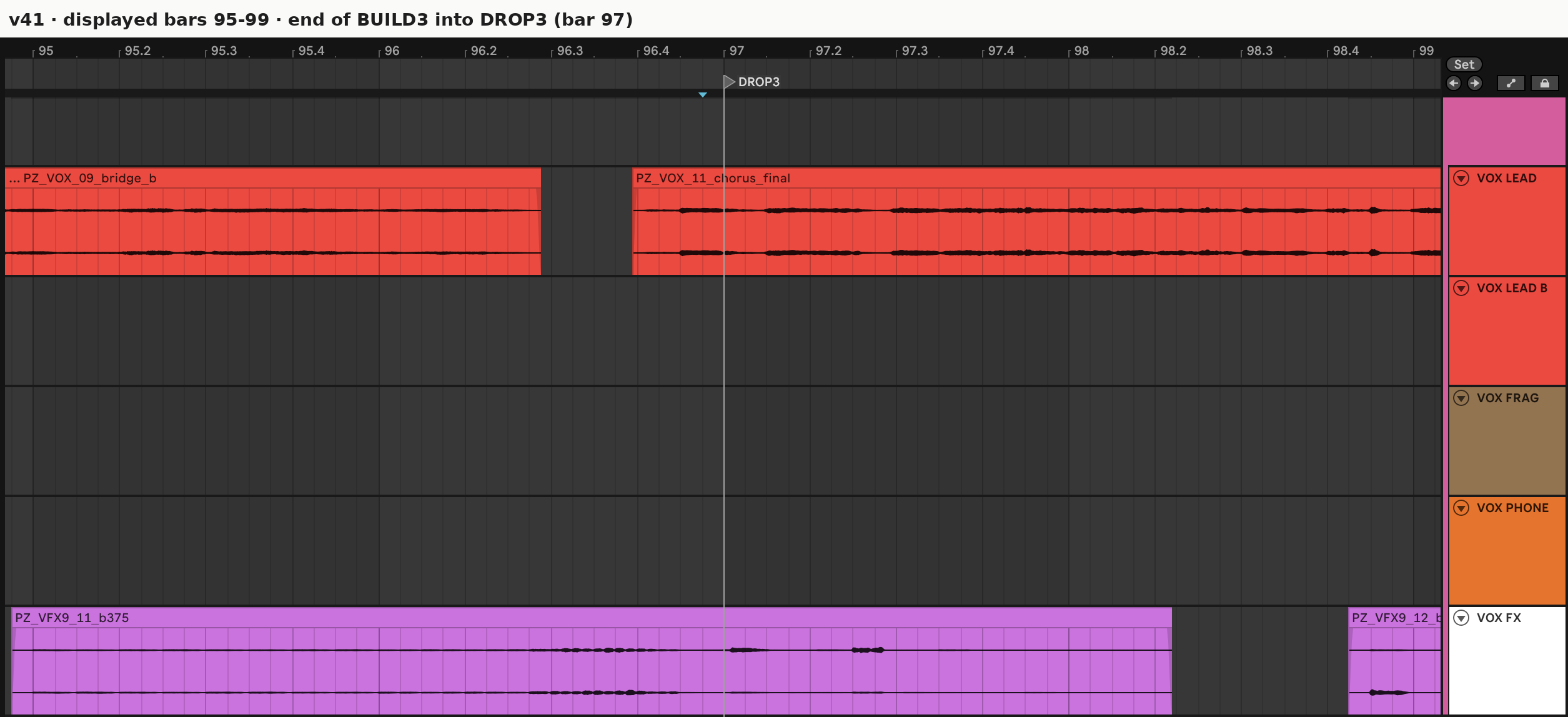
Later, I added short, pitched-up vocal responses in gaps between the lead phrases. Echoes extended selected phrase endings. Repeated vocal fragments sped up into the later drops. Before the last drop they leave a half-beat gap, though one short fragment still lands right on the downbeat.
Those supporting sounds were treated separately from the lead. I made those effects quieter while the lead was singing. I also kept the bridge echoes restrained because a louder echo would’ve competed with the phone-style line I wanted people to follow.
More Taylor in the drops
For the drop choruses, I made doubles from copies of her own takes. One is pitched slightly up and the other slightly down, by seven cents each. A semitone is the distance from one piano key to the very next, counting both black and white keys. A cent is one hundredth of that, so these are tiny pitch changes. I delayed the copies by 14 and 21 milliseconds and placed them around the main voice, which stays in the center.
The first attempt drifted roughly 129 milliseconds away from her voice and doubled some of the sharp S sounds. I corrected the alignment and checked the copies across the whole phrase. I wanted a wider chorus, not the distraction of another vocal arriving late.
I also used her wordless singing, often called vocalise, in the builds. An echo of it is chopped into sixteenth-note pulses, four pulses per beat. It rises beneath the main vocal, then stops a bar before the drop. That’s some of the trance influence coming through, using her performance rather than adding another synth.
The phone-style bridge stays much narrower than the drops. The kick, deepest bass and main voice remain centered while the supporting sounds spread out around them. The bridge and chorus should feel different, but I still want to follow Taylor through both.
The effects made the builds too loud
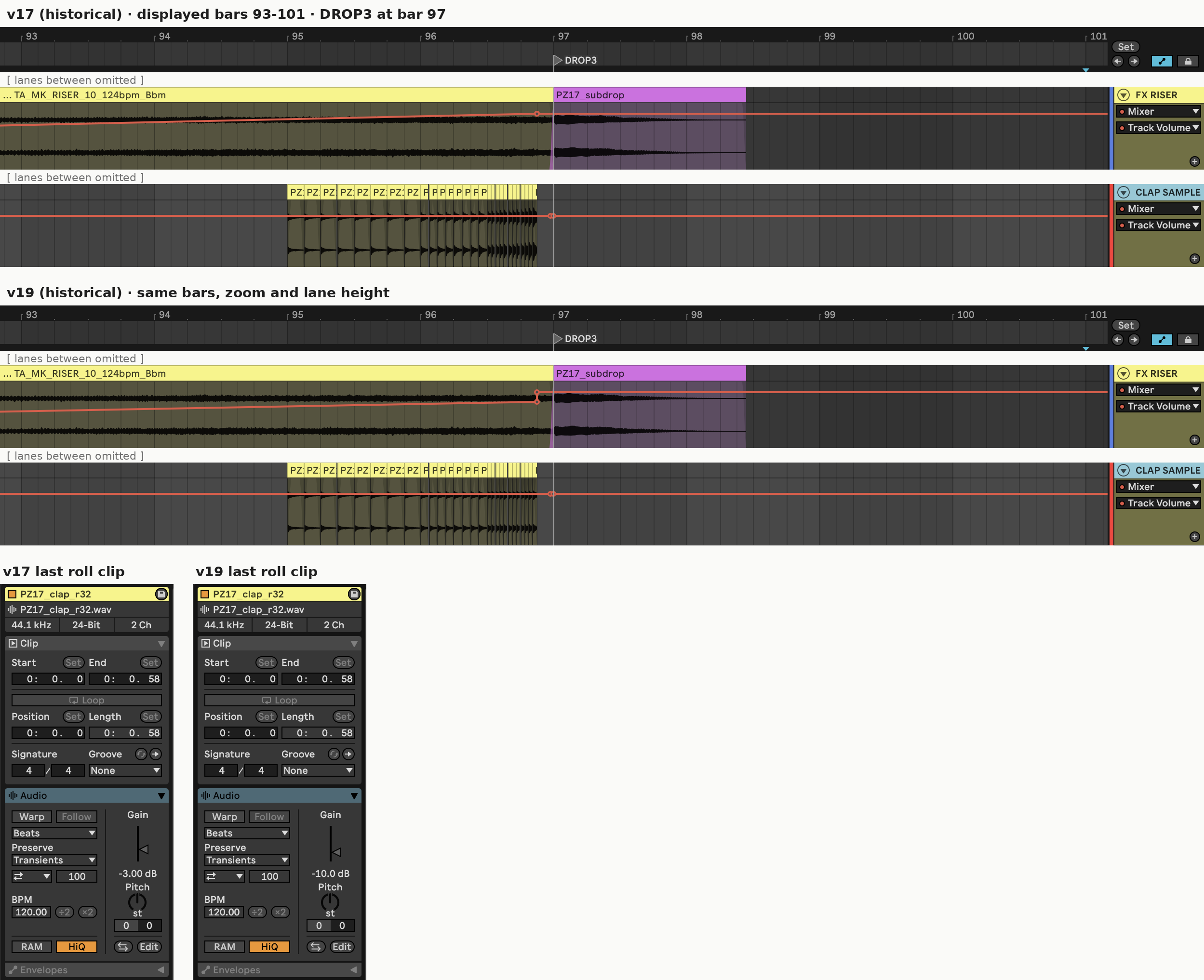
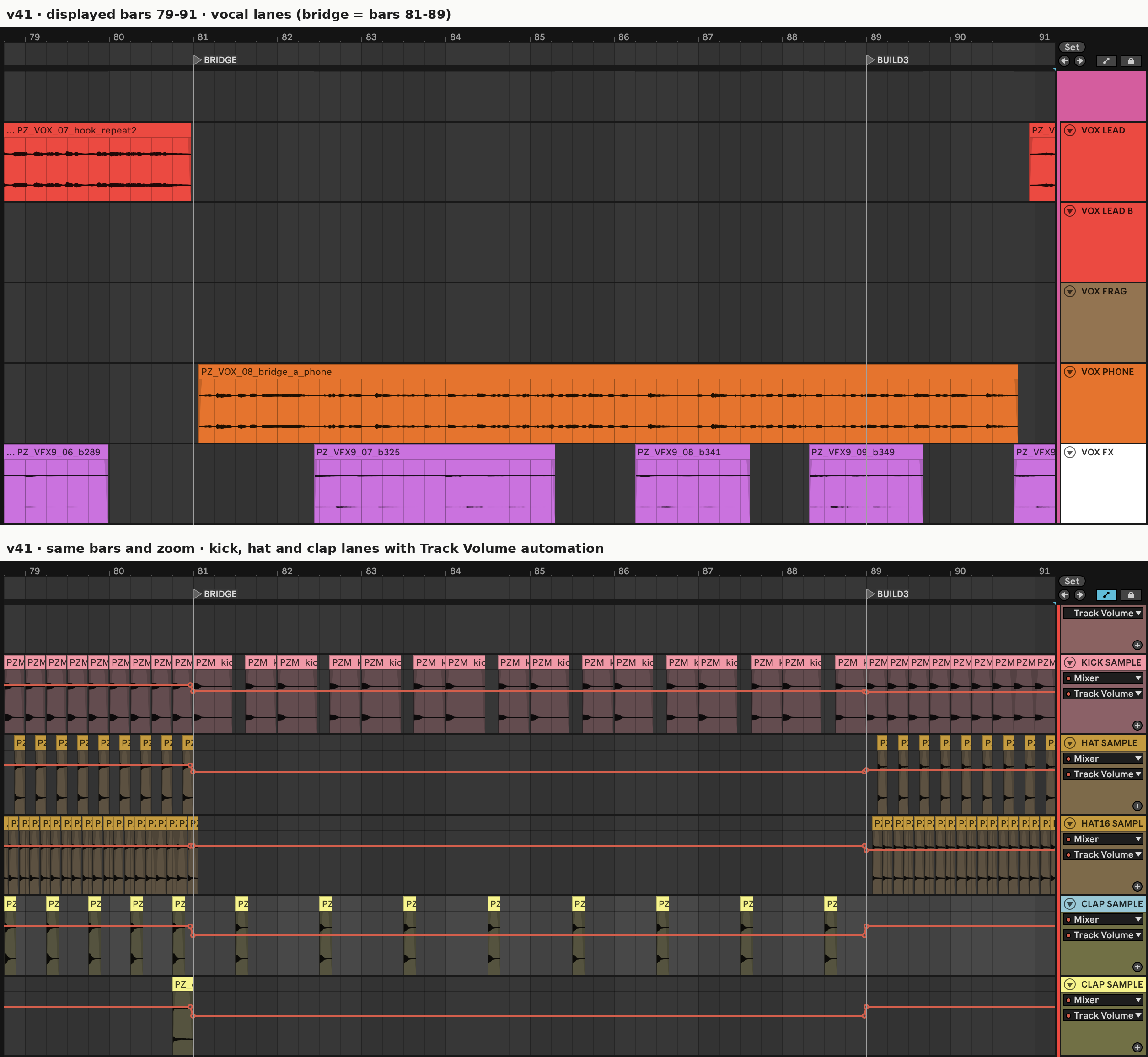
Adding impact hits, rising effects and accelerating clap rolls made the transitions busier. It also raised the level before the drops. One master candidate showed less than one loudness unit of increase into two drops, comparing the four bars before each drop with the four bars after it.
I’d made the builds so loud that the drops had less room to get bigger. I lowered the end of the clap roll and changed how quickly the riser grew louder. Later versions had more of the jump I wanted when the full section arrived.
The bridge needed a different adjustment. The clap’s high-frequency energy was competing with the voice, even though the drums were much quieter in another frequency band. The percussion came down. I wasn’t trying to remove every pulse from the section.
I added a conga groove and an arpeggio, a part that plays the notes of a chord individually. Later I changed that part across the three drops. The first keeps the base pattern. The second shifts some notes between the main beats. The third moves it up an octave, so the last chorus has a higher part underneath it rather than another copy of the first drop.
The Easter egg at 13 seconds
I also wanted a little nod to 13, her favorite number. Something in the audio, rather than a number buried in the project file.
Her first sound in the remix is a reversed swell made from her own wordless singing. It rises out of the pad and ends at exactly 0:13.000. I kept it quieter than her vocal entrance. If you don’t know about the timing, it still works as a lead-in. If you’re counting, there it is.
There were more nods to 13 in earlier versions. I tried a fiddle part in the opening and outro. First I recreated the original opening riff with Ableton’s Tension instrument, which simulates a vibrating string. Then I wrote a different melody for the remix. Each of its three phrases had exactly 13 notes. The part returned at bar 113, and its last note had 13 fading echoes.
I worked on the tuning, vibrato, tone and placement. Some notes wouldn’t start reliably, so I had to fix that too. By v58, the part was darker and better blended than the earlier attempt. I still thought it sounded out of place and stood out too much.
I removed it in v59. The 13-note phrases, bar-113 return and 13 echoes went with it. The reversed vocal swell at 13 seconds is the Easter egg that remains in the current mix.
I liked the idea. I just didn’t like the violin enough to keep it. Taylor’s wordless singing was already in those sections, and I preferred hearing that without another exposed melody.
A few other things I fixed after v41
The intro pad kept sounding different between exports, even when I hadn’t changed its notes. I traced that to its unison setting, which layers copies of the synth sound. The setting I’d chosen added some randomness each time it played. I changed it and adjusted the volume to match. When I’m comparing versions, I want to hear what my edit did. A synth changing on its own makes that harder.
Kickstart makes the keys dip in volume and come back up with each beat. I’d had it doing the same amount of pumping throughout the song. That didn’t suit every section, so I made it gentler in the intro and bridge and stronger in the builds and drops. I liked the movement under the chorus. Under the phone-style bridge vocal, I wanted less of it.
I also used EQ to make a few sounds less sharp and give Taylor’s voice more room. I turned down part of the clap and snare around 1.2 kHz, softened the vocal around 7.5 kHz and reduced some of the arpeggio around 800 Hz. I cut low frequencies from the atmosphere pad so it wasn’t crowding the bass. Adding another sound shouldn’t mean I have to turn Taylor up again just to hear her.
Mastering didn’t settle the sound choices
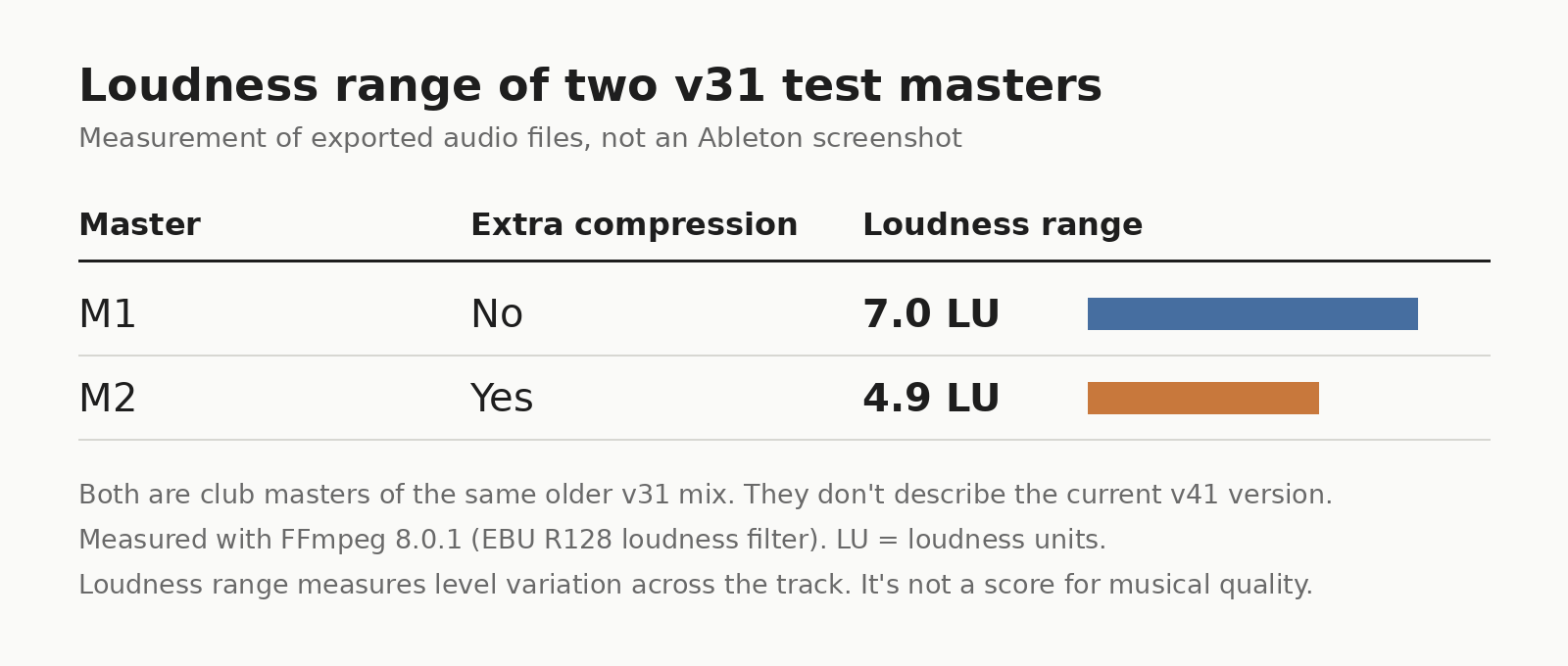
I tested master variants with extra compression. In one comparison, the loudness range fell from about 7 to about 5 loudness units. That’s a measure of level variation across the track, not a score for musical quality. That version reduced more of the track’s level changes than intended, so it wasn’t kept.
Another version passed its technical checks but still had a different balance of frequencies from the references. I went back into the mix and adjusted the synths, drum brightness and kick/bass balance. I couldn’t settle those sound choices by adding another effect to the master.
Code I’ve built for my workflow handles some of the tedious comparisons and prepares versions for review. I also compare excerpts without seeing which version is playing. Sometimes I prefer the new one. Sometimes they’re too similar to call. The reports help me decide what to check, but I’m still listening and making the call.
Version 59 became the base for the next round. By version 62, I’d also varied the level of individual drum hits, added slow pan movement to the hats and percussion and softened some of the pitched vocal responses. I prepared separate club and streaming masters, using a separate set of mastering effects for the streaming version rather than simply turning down the club master. Both completed the project’s technical checks. I’ve kept the measurements and reference comparisons in my documentation. That’s my production checkpoint. Permission to release the full remix is still pending.
If you swap out a kick, check how much of the new sample is actually playing. I’d chosen a longer kick, but the old settings were cutting it short. Once you’ve checked that, listen to the kick and bass together through the bassline. They might sound good together on one note and get muddy on another.
With a vocal remix, try turning off the extra vocal layers, then bring them back one at a time. Listen to the words as you do it. If a layer makes them harder to follow, it needs more work or it needs to go. Try muting that part you’ve spent hours on too. I put two rounds into the fiddle and still liked the track better without it. Annoying, but there it is.
I’d love for Taylor and her team to hear what I’ve made. For now, the remix stays private on SoundCloud while I wait for permission to share it. The little nod to 13 made the cut. Fingers crossed the remix gets its turn.
Resources
The original: Taylor Swift’s “Patient Zero” on Spotify.
My unofficial remix: Watch the short preview on Instagram or YouTube. The full remix isn’t publicly available. I’ll add a full listening link here if I receive permission to share it.
Ableton’s Live 11 guide to audio clips, tempo and warping covers audio timing and Warp controls.
Ableton’s Live 11 audio-effect reference explains compression and sidechain routing.
Toolroom’s Mark Knight Trademark pack identifies the library discussed here. The project records use that pack name; this article doesn’t specify a numbered edition.
Project note: the version history and reported results come from my saved production records through October 8, 2026, including the version 62 masters. The screenshots show the historical versions named in their captions. Reference comparisons describe the files and analysis methods I used in this project. They don’t establish rules for every melodic house track or replace listening on actual playback systems.