

TL;DR
Beatport now withholds fully or majority AI-generated tracks while accepting AI-assisted music when the finished track remains majority human-made.
Traxsource can ask for evidence of human creative input when an AI label is challenged. Its policy specifically mentions screenshots of session files.
The bigger shift is provenance: how a record was made can now affect ingestion, curation, chart eligibility and discovery.
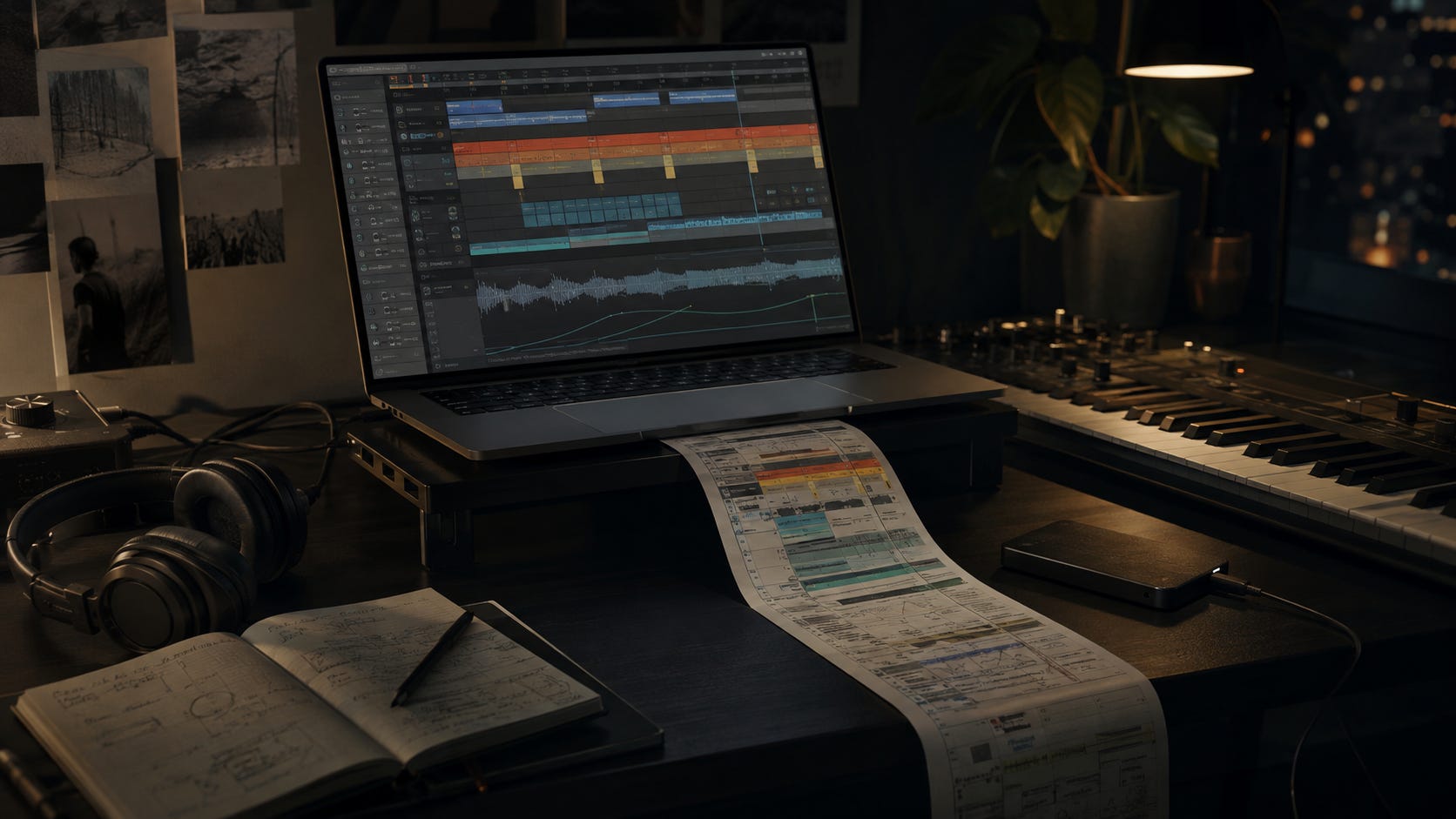
A session file used to have one job: let you reopen the track.
Traxsource has given it another.
Its current AI Policy says an artist, remixer, label or distributor challenging an AI label can submit evidence of human creative input. The example Traxsource gives is unusually specific: screenshots of session files.
That doesn’t make an Ableton project some universal certificate of humanity. A screenshot can’t tell the complete story of who made a record or how every decision happened.
But once a music store says the session can matter in a classification dispute, the production archive has changed.
It used to document how you made the record. Now it may also help document that you made it.
It used to document how you made the record.
Now it may also help document that you made it.
Beatport draws the line before the track gets in
On August 12, Beatport expanded its work with Beatdapp to identify AI-generated music during ingestion. Under the updated policy, fully or majority AI-generated tracks aren’t permitted on the platform. They can be withheld during ingestion, with rightsholders notified directly. (Beatport)
AI-assisted music is treated differently. Beatport says it remains eligible when the finished track is majority human-made. Those releases are tagged during ingestion so its curation team knows what it is reviewing and featuring.
That’s more useful than flattening the story into “Beatport bans AI.”
The platform is separating AI used inside a human creative process from a system generating most or all of the finished work. Then it attaches different outcomes to those categories.
One can enter the catalog with additional information attached. The other may not enter at all.
Resident Advisor picked up the change on August 17, and Beatportal still lists the announcement in its Trending Now section as of August 24. This isn’t an abstract argument outside electronic music. A store DJs use every day has turned the distinction into an ingestion rule. (Resident Advisor)
Traxsource can ask to see the session
Traxsource goes further because its policy describes what can happen when the classification itself is disputed.
The store says it can scan music using third-party systems before release and label it substantially as Human or AI Assisted. It also says those systems can make errors. If an account holder challenges the label, Traxsource can consider additional evidence before making its final determination. (Traxsource AI Policy)
Then comes the part I keep coming back to: the session file.
Evidence of human creative input can include material beyond prompting an AI model, such as screenshots of session files or other similar evidence.
Traxsource says evidence can include material showing human creative input beyond prompting an AI model, “such as screenshots of session files or other similar evidence.” The same language appears in Section 14 of its Terms of Service.
The policy doesn’t say every producer needs to submit a DAW project. It doesn’t say a screenshot proves authorship by itself. It doesn’t even claim the scanner is perfect. In February, Traxsource publicly argued the opposite, saying accurate AI detection still has serious limits and that hybrid workflows make the problem harder. (Traxsource position on AI music)
That makes the evidence rule more interesting, not less.
If automated classification can be wrong, the question becomes what a human can produce when the label is challenged.
A project file. Arrangement history. Premasters. Stems. MIDI. Automation. Dated exports. The ordinary debris of making a record starts to have evidentiary value.
Traxsource also attaches consequences to the result. Music it determines is entirely AI-generated can be excluded from its charts or removed from the service. Repeated submissions can put the account at risk.
The creative process used to disappear behind the master. Now part of it may need to remain recoverable.
Spotify separates the artist from the process
Spotify added a different layer on August 11 when it announced AI Persona badges.
The distinction here matters. Spotify says the badge is about the artist’s public identity, not about how the music was made. Artists can self-disclose now. Starting in mid-September, Spotify says listeners will begin seeing the badge on some profiles, in Search and on track rows across playlists. (Spotify)
By default, Spotify says AI Personas won’t be included in editorial or algorithmic recommendations unless a listener has chosen to follow them, for example.
Then Spotify points somewhere else for the creation question: AI Credits and SongDNA. AI Credits let artists disclose how AI was used during music creation. SongDNA gives listeners more context about the artists and contributors behind a track.
So Spotify is separating two questions that are easy to blur together:
Who is the artist?
How was the music made?
Different information. Different product behavior.
Beatport is using AI-related information during ingestion and curation. Traxsource can use it for labeling, charts and removal. Spotify is exposing identity and creation information through separate features, then changing recommendation behavior for one of those identity categories.
Some of this information is public. Some of it sits inside platform operations. Either way, the production process is no longer completely invisible once the master leaves the studio.
Do the six-month test
Open a released project from six months ago.
Now imagine a platform classifies that track as AI Assisted and you believe it’s wrong. Don’t argue the philosophy of it. Ask a much more boring question:
What could you show them?
Maybe you still have the final project with the arrangement intact. Maybe you have dated premasters and stems. Maybe the vocal comp, automation, MIDI, synth patches or dozens of tiny edits tell the story without much explanation.
Or maybe all you kept was the master.
This isn’t an argument for building a forensic evidence package every time you open the DAW. Producers already have enough administrative work.
But preserving the production trail costs much less than reconstructing one later.
Keep the final session. Keep the bounces that matter. Keep accurate credits. If an AI tool materially participated in the work, make a simple note of what it did instead of trusting yourself to remember a year later.
Don’t manufacture evidence after the fact. Preserve the evidence your normal creative process already produces.
And don’t make your music worse trying to perform “human-made” for a scanner. Beatport explicitly allows AI-assisted work when the finished track remains majority human-made. Traxsource describes AI as a legitimate production tool when it sits inside a larger human-driven creative process.
The goal isn’t purity. It’s being able to describe what actually happened.
The session has a second job
Release metadata used to describe the finished object: artist, title, label, writers, genre, ISRC, release date.
Now another question is entering the machinery around the record:
How was this made?
There isn’t one common answer, one shared classification system or one standard of proof across these platforms. Beatport, Traxsource and Spotify are doing different things. That difference matters.
But they’re all attaching information or consequences to some part of the creation story.
That’s the shift I’d pay attention to.
Your DAW session doesn’t need to become a courtroom exhibit. It does need to stop looking like disposable clutter the moment the master is delivered.
Keep the session like it may someday have to tell the story without you standing there to explain it.
If one of your released tracks were questioned six months from now, what would you still have besides the master?
Resources
Beatport, Beatport Expands Beatdapp Partnership to Detect AI-Generated Music, August 12, 2026.
Traxsource, AI Policy, current v1.1.
Traxsource, Terms of Service, Section 14: AI Policy.
Traxsource, Our Position on AI Music, effective February 19, 2026.
Spotify, Introducing a New Label for AI-Generated Artist Identities on Spotify, August 11, 2026.
Resident Advisor, Beatport expands Beatdapp partnership to detect AI-generated music, August 17, 2026.
Analytical note: the argument that production provenance is becoming operational metadata is my inference from these policies and product features. The platforms use different classifications and consequences. I am not claiming they share one industry standard, that AI detection is infallible or that a DAW screenshot alone proves human authorship.