

I remember looking at a compressor for the first time and thinking it was just a fancy volume knob. The logic seemed sound: the loud parts are too loud, so I need to push them down. If I squash the peaks, I can turn the whole thing up, and my mix will sound like the records I play in the club.
But every time I did this, the track died. The drums got louder, sure, but they stopped hitting. The bassline was consistent, but it stopped grooving.
I had fallen into the most common trap in mixing: assuming compression is about controlling levels. It isn’t. Compression is about designing the envelope of a sound.
It is the tool that decides if a sound lives in the front of the speakers or pushes into the back of the room. It creates the difference between a sound that is static and a sound that moves.
The Envelope is the Groove
To hear compression correctly, you have to stop listening to volume and start listening to shape.
Every sound has a lifespan, an entry and an exit. In synthesis, we call this the ADSR (Attack, Decay, Sustain, Release). In mixing, the compressor is your tool to rewrite that ADSR curve after the sound has been recorded.
When you adjust a compressor, you aren’t changing how loud the track is; you are changing how the track moves through time. You are deciding which part of the waveform dominates the listener’s attention: the rhythmic impact (Attack) or the sustained body (Release).
Attack: Who Gets to Speak First?
The Attack knob is often misunderstood as “how fast the compressor turns on.” While technically true, perceptually, this is the wrong way to think about it.
Think of the Attack knob as a gatekeeper for transients.
A slow attack lets the initial “crack” of the snare or the “pluck” of the bass pass through before the compressor clamps down. This exaggerates the punch. It makes the sound feel aggressive and forward.
A fast attack grabs the sound immediately, softening that initial transient. This pushes the sound back into the mix, making it feel smoother, thicker, and further away.
The Perceptual Shift: Don’t ask, “Is the compressor catching the peak?” Ask, “Do I want this sound to poke me in the eye, or do I want it to sit back in the chair?”
If your drums feel weak, you don’t need more volume, you likely need a slower attack to let the transient punch through the clamp.
Release: The Breath of the Track
If Attack is the punch, Release is the groove. This is where the music breathes.
The Release knob controls how long the compressor holds onto the sound before letting go. This is the most critical setting for electronic music because it interacts directly with your BPM.
If the release is too fast, the compressor lets go before the next beat hits, causing the sound to jump up nervously.
If the release is too slow, the compressor never fully recovers before the next hit. The gain reduction stays pinned, and the track feels suffocated and small.
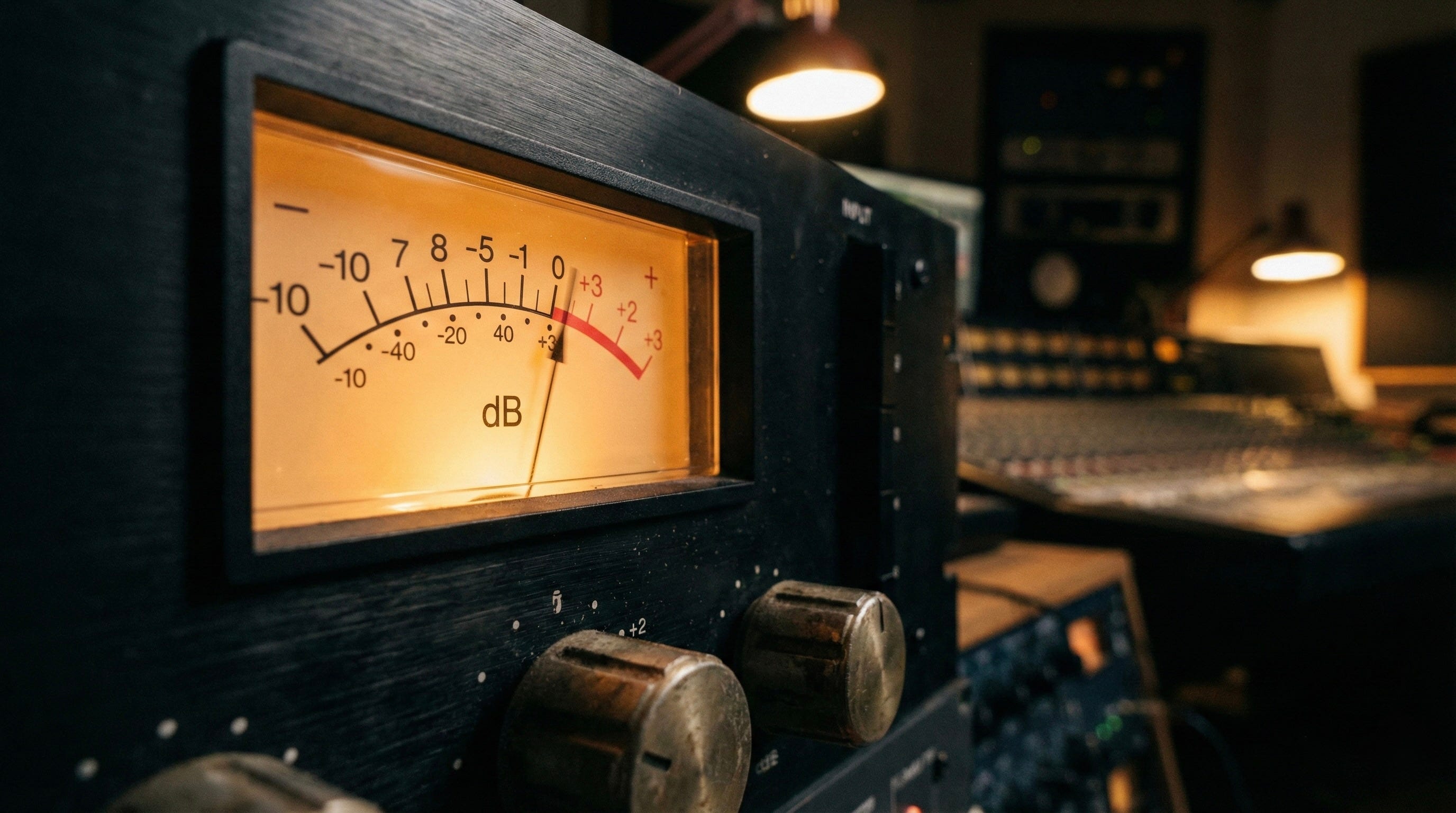
The Perceptual Shift: Watch your gain reduction meter. It shouldn’t look like a static line; it should look like a dancer. It needs to bounce. The needle should return to zero (or close to it) right as the next kick drum hits. That rhythmic movement of the needle is the groove.

The Experiment
You cannot hear these shapes if you are being polite with your threshold. To truly understand motion, you have to break the sound first.
Try this on your next mix:
Take a drum bus or a rhythmic synth loop.
Drop the threshold until you have 10dB or -15dB of gain reduction. The sound will be crushed.
Set a fast attack and a slow release. The sound will disappear; it will sound flat, lifeless, and distant.
Now, slowly open the Attack. Listen to the punch return. You will hear the stick hit the skin again. You are physically shaping the front of the note.
Next, speed up the Release. Listen to the groove return. You will hear the “suck” and “pump” of the room tone. You are tuning the rhythm of the compressor to the rhythm of the song.
Once you feel the compressor “locking in” with the BPM, you can back off the threshold to a sensible level. But often, you’ll find that the character you found while destroying the sound is exactly what the mix needed.
Dancing vs. Fighting
We often use visual metaphors in mixing, but compression is kinetic. It’s about physical weight and momentum.
A compressor with a static needle is fighting your track, it is pinning it down and holding it hostage. A compressor with a bouncing needle is dancing with your track, it is accentuating the movement that is already there.
The next time you reach for a compressor, ignore the ratio for a moment. Ignore the makeup gain. Close your eyes and ask: Is this making the track move forward, or is it holding it back?
Shape the motion. The loudness will follow.